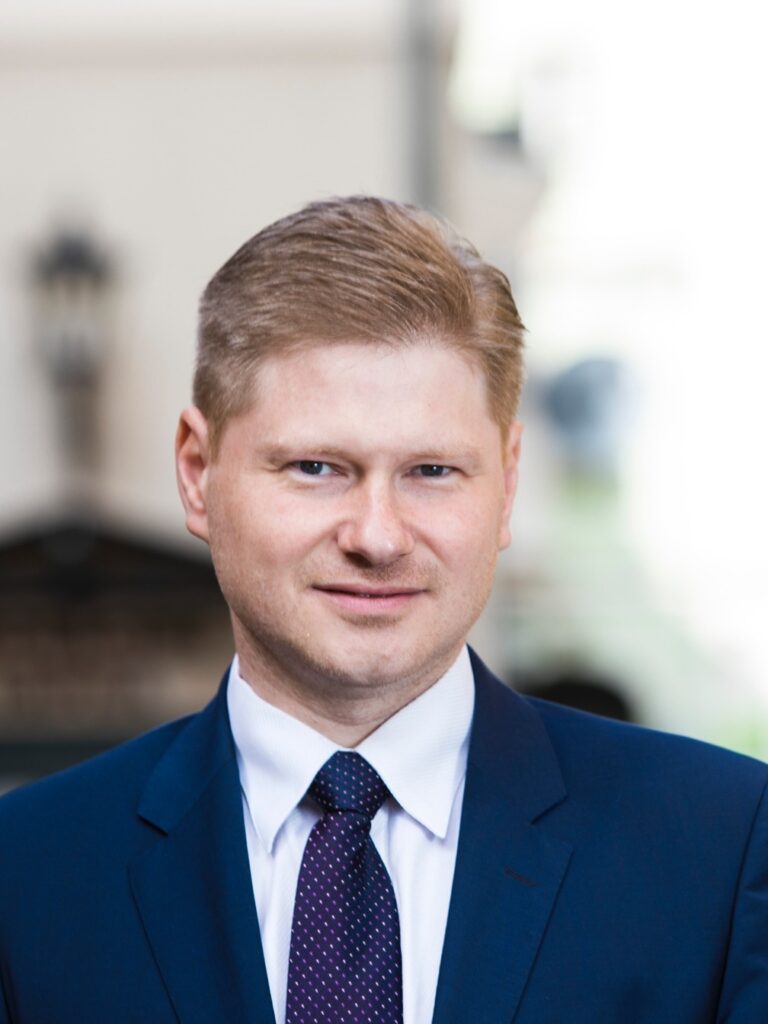
Sergejs Potapkins is a researcher at the Latvian Institute of International Affairs (LIIA) and a PhD candidate in International Relations and Diplomacy. His professional and academic work focuses on international security, geopolitical developments in Eurasia, critical infrastructure resilience, and Latvia’s foreign and security policy. His broader research interests include the transformation of the international order, relations between Europe and its wider neighbourhood, and the political and security implications of increasing global fragmentation.
At LIIA, Sergejs contributes to international research and policy projects addressing security, resilience, and geopolitical challenges. His recent work has included research on evolving threats to critical infrastructure in the European Union and candidate countries, with particular attention to the impact of geopolitical competition, hybrid threats, and Russia’s war against Ukraine. He is also involved in analysis of political and security developments across the wider Eurasian region and their implications for European foreign and security policy.
Sergejs regularly participates as a speaker and expert in international conferences, strategic dialogues, and policy discussions bringing together policymakers, diplomats, researchers, civil society representatives, and security experts. His work combines academic research with a practical policy perspective, focusing on how geopolitical developments translate into concrete challenges for governments, institutions, and societies.
Before joining the research community, Sergejs served as a Member of the Latvian Parliament (Saeima), where he was Deputy Chairman of the Foreign Affairs Committee and a member of the Sustainable Development Committee. His parliamentary work covered foreign policy, international cooperation, regional security, and Latvia’s engagement with international partners. This experience provided him with first-hand knowledge of policymaking, parliamentary diplomacy, and the interaction between domestic political priorities and international affairs.
His current interests pay particular attention to the Baltic region and wider Eurasia, including the evolving relationship between the European Union and countries in Eastern Europe and Central Asia. He is particularly interested in how small and medium-sized states navigate an increasingly fragmented international environment, strengthen their resilience, develop new partnerships, and respond to the growing intersection of security, technology, economic interests, and geopolitical competition.